

Table of Contents
- Understanding Sciatica Before Trying Home Remedies
- Keep Moving Within Your Comfort Level
- Choose Exercises Based on How Your Sciatica Responds
- Be Careful With Aggressive Stretching
- Try Heat or Cold for Short-Term Sciatica Pain Relief
- Can Turmeric Help With Sciatica?
- Pay Attention to Sitting and Daily Movement Habits
- When Should Sciatica Be Professionally Evaluated?
- How Chiropractic Care May Fit Into Sciatica Treatment
- Natural Sciatica Pain Relief Should Help You Return to Normal Life
- Schedule an Appointment for Sciatica Care
- Frequently Asked Questions
Understanding Sciatica Before Trying Home Remedies
Although sciatica is commonly described as a “pinched sciatic nerve,” the cause is not always that simple. Sciatic-type symptoms often involve irritation of a nerve root in the lower back. That irritation may be related to a disc problem, spinal stenosis, inflammation, or another musculoskeletal issue.
For mild symptoms that are stable or improving, there are several natural strategies that may help manage discomfort and support recovery. The key is choosing approaches that help you remain active without repeatedly aggravating your symptoms.
It is also important to remember that sciatica describes a pattern of symptoms rather than one specific diagnosis. Pain in the buttock or leg does not automatically prove that the sciatic nerve is being compressed. Understanding what is actually causing the symptoms can help guide appropriate treatment. Understanding the causes and symptoms of sciatica can help determine what is actually causing the symptoms and guide appropriate treatment.
Keep Moving Within Your Comfort Level
When sciatica hurts, it can be tempting to stop moving until the pain completely disappears. However, prolonged bed rest is generally not the goal for an uncomplicated case of sciatica.
Instead, try to remain as active as reasonably possible while temporarily modifying activities that clearly increase your symptoms.
Helpful strategies may include:
- Taking several short walks throughout the day
- Changing positions regularly instead of sitting for long periods
- Temporarily reducing activities that cause symptoms to travel farther down the leg
- Breaking longer activities into shorter, more manageable periods
- Gradually increasing activity as your tolerance improves
There is an important difference between modifying an activity because it currently irritates your symptoms and deciding that the movement is permanently unsafe.
Modification is different from avoidance.
Choose Exercises Based on How Your Sciatica Responds
There is no single exercise that works for everyone with sciatica. The most appropriate movements depend on what is contributing to the symptoms and how your body responds.
For example, one person may feel better with a particular spinal movement while another experiences more leg pain from the same exercise. Someone with symptoms related to spinal stenosis may also respond differently from someone with a disc-related problem.
Pay attention not only to how intense the pain feels but also to where the symptoms travel.
If pain, tingling, or numbness that previously traveled into the calf or foot begins retreating toward the buttock or lower back, this is sometimes called centralization and may be an encouraging response.
If an exercise repeatedly causes symptoms to travel farther down the leg, known as peripheralization, it may be a sign that the movement should be modified or reconsidered.
The goal is not to find a universal “sciatica exercise.” It is to identify movements that allow you to gradually restore function without repeatedly aggravating neurological symptoms.
Be Careful With Aggressive Stretching
Stretching is one of the most commonly recommended natural remedies for sciatica, but more stretching is not always better.
What feels like a tight hamstring or glute may sometimes involve sensitivity of the nervous system. Aggressively stretching an irritated nerve can potentially increase symptoms rather than relieve them.
Gentle mobility exercises, carefully selected stretches, or nerve-mobility exercises may be appropriate for some people. However, consider stopping or modifying an exercise if it repeatedly causes:
- More tingling or burning
- Increased numbness
- Sharper radiating pain
- Symptoms to spread farther toward the calf or foot
Rather than searching for one “miracle stretch,” it is usually more helpful to find movements that match your individual symptoms and improve your ability to move comfortably.
Try Heat or Cold for Short-Term Sciatica Pain Relief
Heat and cold can both be useful comfort strategies for some people experiencing sciatica.
Heat may feel helpful when muscle tension or stiffness accompanies the symptoms, while cold may feel more comfortable during an irritated flare. Neither treatment addresses the underlying cause of sciatica, but either may provide temporary comfort while you continue appropriate movement and activity.
Protect your skin when using either option. Avoid applying extreme heat or ice directly against the skin for prolonged periods, particularly in areas where sensation is reduced.
Can Turmeric Help With Sciatica?
Turmeric contains curcumin, a compound that has been studied for its anti-inflammatory properties. However, turmeric should not be considered a proven treatment for sciatica, and there is no specific turmeric drink that has been shown to stop sciatic nerve pain.
Using turmeric as part of a normal diet is also different from taking concentrated curcumin supplements. Supplements can interact with medications and may not be appropriate for everyone.
If you take prescription medications or have an underlying health condition, speak with an appropriate healthcare professional before adding a concentrated turmeric or curcumin supplement.
Nutrition can support overall health, but food and supplements should not replace an appropriate evaluation when nerve-related symptoms are persistent, worsening, or accompanied by neurological changes.
Pay Attention to Sitting and Daily Movement Habits
If sitting aggravates your symptoms, changing positions more frequently may help. A workstation adjustment, lumbar support, or regular standing and walking breaks may also make prolonged work more tolerable.
However, you do not need to find one perfect posture and maintain it all day.
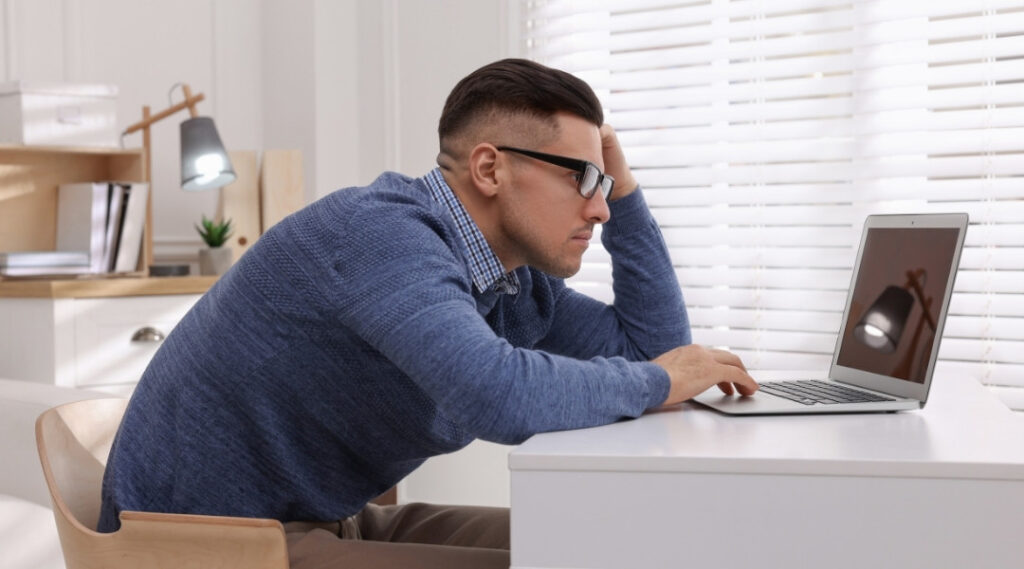
The spine is designed to move through different positions. Over time, a more useful goal is to build tolerance for sitting, standing, bending, walking, lifting, and other normal activities rather than trying to hold your body in one “perfect” position.
A capable back should have options.
When Should Sciatica Be Professionally Evaluated?
Home strategies may be reasonable when symptoms are mild, neurological function is stable, and the overall pattern is improving. Persistent, worsening, or unusual symptoms deserve a closer evaluation.
A healthcare professional can help determine whether symptoms are consistent with nerve-root irritation or whether another condition involving the lower back, hip, SI region, or surrounding tissues may be responsible.
Seek prompt medical evaluation if you develop symptoms such as:
- Progressively worsening leg weakness
- Increasing difficulty walking because the leg is losing strength
- Significant or expanding numbness
- New bowel or bladder dysfunction
- Numbness or altered sensation in the saddle or groin region
New bowel or bladder dysfunction combined with saddle-area sensory changes or significant neurological loss can be associated with a serious condition called cauda equina syndrome and requires urgent medical evaluation.
Severe pain alone does not necessarily mean severe nerve damage, but changes in neurological function should be taken seriously.
How Chiropractic Care May Fit Into Sciatica Treatment
For appropriately selected patients, chiropractic care may be one part of a broader conservative treatment plan for sciatica.
Depending on the examination findings, care may include spinal manipulation or mobilization, exercise, movement education, activity modification, and strategies for gradually rebuilding strength and movement tolerance.
An adjustment should not be described as putting a disc back into place or physically “unpinching” the sciatic nerve. Instead, manual therapy may help some people manage pain or move more comfortably, which can make it easier to remain active and participate in rehabilitation.
The long-term goal should be to increase what the patient can do independently rather than create dependence on repeated passive treatment.
Natural Sciatica Pain Relief Should Help You Return to Normal Life
The goal of managing sciatica should not simply be to reduce today’s pain. Over time, recovery should help you regain confidence in sitting, walking, bending, lifting, exercising, working, traveling, and participating in the activities that matter to you.
Temporary flare-ups can happen during recovery and do not automatically mean a disc has become damaged again or that all progress has been lost.
Instead, look at the overall pattern. Are symptoms becoming easier to manage? Is neurological function stable or improving? Can you walk farther, sit longer, exercise more comfortably, or perform more of your normal activities?
Successful recovery often means building capacity, confidence, and independence rather than simply chasing a pain score of zero.
Schedule an Appointment for Sciatica Care
Schedule an appointment today with Creekside Chiropractic in Holladay, Utah if sciatica symptoms are interfering with your daily activities or you are unsure what is causing pain, numbness, tingling, or weakness in your leg. A thorough evaluation can help determine whether a nerve root appears to be involved and whether conservative care may be appropriate for your situation.
Frequently Asked Questions
What drink stops sciatic nerve pain?
There is no specific drink proven to stop sciatic nerve pain. Staying hydrated supports overall health, but water, herbal tea, turmeric drinks, and other beverages should not be expected to treat the underlying cause of sciatica. If symptoms persist or worsen, determining what is irritating the nerve is more important than relying on a particular drink.
What are the best natural remedies for sciatica?
Helpful natural approaches may include staying reasonably active, taking short walks, changing positions regularly, using heat or cold for temporary comfort, and choosing exercises that do not repeatedly worsen or spread symptoms farther down the leg. The most appropriate approach depends on the cause of the symptoms and how they respond to movement.
What is the miracle stretch for sciatica?
There is no single “miracle stretch” that works for everyone with sciatica. Different causes of sciatic-type symptoms can respond differently to movement, and aggressive stretching can sometimes irritate a sensitive nerve. If a stretch increases tingling, numbness, burning, or pain farther down the leg, it may need to be modified or avoided until the symptoms are properly evaluated.
What foods get rid of sciatica?
No food has been shown to get rid of sciatica. A balanced diet that includes fruits, vegetables, whole grains, lean proteins, healthy fats, and other nutrient-dense foods can support overall health and recovery, but diet does not replace appropriate evaluation or treatment for nerve-root irritation. Foods containing anti-inflammatory compounds can be part of a healthy eating pattern, but they should not be presented as a cure for sciatica.


