
BioPhysics
Trained
Herniated Disc Treatment in Salt Lake City, Utah
Chiropractic Care for Herniated Disc Pain
A herniated disc can place pressure on nearby nerves and make everyday movement feel painful, limited, or unpredictable. Symptoms may show up as back pain, neck pain, sciatica, numbness, tingling, or weakness, depending on where the disc is affected. Chiropractic care for herniated discs focuses on relieving pressure, improving spinal movement, and supporting the body’s natural healing process. At Creekside Chiropractic, treatment is personalized to help reduce discomfort, restore mobility, and support long-term spinal function without relying only on temporary symptom relief.
Understanding Herniated Disc Pain and Recovery
Care for herniated discs at Creekside Chiropractic begins with a detailed evaluation of your spine, posture, and movement patterns. A herniated disc occurs when the soft inner portion of a spinal disc pushes through its outer layer, often placing pressure on nearby nerves. This assessment helps identify where the disc is affected and how it is influencing your symptoms. Factors such as posture, daily activities, and previous injuries are also considered to understand the full picture. From there, a personalized care plan is created to address both the symptoms and the underlying cause, supporting long-term improvement rather than temporary relief.
- Reduce pressure on affected discs and nearby nerves
- Improve mobility and spinal function
- Support long-term healing and stability
Disc-related issues can significantly impact how you move and feel throughout the day. Addressing the condition early helps prevent worsening symptoms and supports more effective recovery over time.
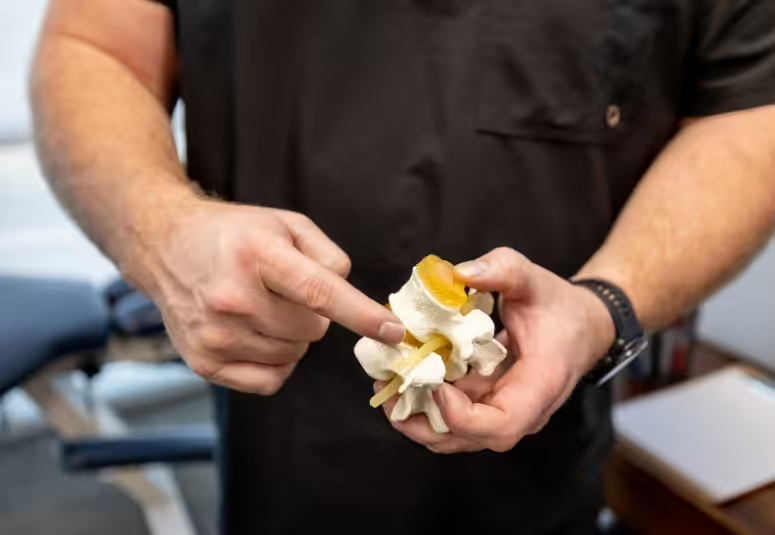
What Causes a Herniated Disc?
Herniated discs often develop from a combination of gradual wear and sudden strain on the spine. As we age, spinal discs lose flexibility and become more susceptible to tearing or bulging. Poor posture, especially during prolonged sitting, can increase pressure within the discs and contribute to damage over time. Injuries from lifting, accidents, or repetitive movements may also trigger a herniation. In many cases, a disc issue develops slowly and is worsened by a single movement or event.
- Age-related disc degeneration
- Poor posture or prolonged sitting
- Improper lifting or sudden injury
- Repetitive strain or physical stress
When these factors are not addressed, they can continue to place stress on the spine and surrounding tissues. This often leads to increased pressure on nerves and ongoing discomfort. Identifying and correcting the root cause is essential for long-term recovery and improved function.
Common Signs and Symptoms of a Herniated Disc
A herniated disc can cause a range of symptoms depending on its location and severity. Many people experience localized pain in the back or neck, which may feel sharp, burning, or aching. If the disc presses on a nerve, symptoms can radiate into the arms or legs, sometimes causing numbness or tingling. These symptoms may worsen with certain movements such as bending, lifting, or sitting for long periods.
- Localized back or neck pain
- Radiating pain into the arms or legs, including sciatica
- Numbness or tingling
- Muscle weakness or reduced mobility
If these symptoms sound familiar, you’re not alone—herniated discs are a common cause of back and nerve-related pain. Many people experience these issues without realizing the underlying cause. Proper evaluation helps determine the source of the problem and guide effective care.
How Chiropractic Care Helps Herniated Discs
Chiropractic care focuses on reducing pressure on the affected disc and improving overall spinal function. Adjustments are used to restore proper alignment and joint movement, which can help relieve nerve irritation and improve mobility. In addition to adjustments, care may include spinal decompression, corrective exercises, posture correction, and soft tissue therapy. These techniques work together to support healing and reduce strain on the spine. Each treatment plan is customized based on your condition and goals.
- Reduce pressure on discs and nerves
- Improve spinal alignment and joint mobility
- Support natural healing of the disc
- Strengthen surrounding muscles for stability
This approach is designed to go beyond temporary pain relief by addressing the underlying mechanical issues contributing to the condition. Over time, improving alignment and movement helps reduce the likelihood of recurring symptoms. The goal is to support long-term spinal health and function.
When Should You Seek Treatment for a Herniated Disc?
It may be time to seek care when symptoms become persistent, worsen over time, or begin to interfere with daily activities. Many people try to manage discomfort with rest or temporary solutions, but these often do not address the underlying issue. If nerve-related symptoms like numbness, tingling, or weakness are present, it’s especially important to seek evaluation. Early care allows for a more targeted and effective treatment plan.
- Pain that continues or keeps returning
- Radiating pain, numbness, or tingling
- Difficulty moving, bending, or sitting comfortably
- Limited improvement with rest or home remedies
Taking a proactive approach can help prevent the condition from worsening and reduce the risk of long-term complications. Early treatment supports better outcomes and helps restore normal movement more efficiently.
Frequently Asked Questions
What is a herniated disc?
A herniated disc occurs when the soft inner portion of a spinal disc pushes through a tear in the outer layer. This can place pressure on nearby nerves and cause pain, numbness, or weakness. It is sometimes referred to as a “slipped” or “bulging” disc. The severity of symptoms depends on the location and extent of the herniation.
Can a herniated disc heal without surgery?
In many cases, a herniated disc can improve with conservative care such as chiropractic treatment, exercise, and activity modification. Recovery timelines vary, but many people experience improvement over weeks to months. Non-surgical care focuses on reducing pressure and supporting natural healing. Surgery is typically considered only in more severe cases.
What does herniated disc pain feel like?
Pain from a herniated disc can feel sharp, burning, or radiating, depending on whether nerves are involved. It may travel into the arms or legs and worsen with certain movements. Some people also experience numbness or tingling. Symptoms vary based on the location of the affected disc.
Can chiropractic care help a herniated disc?
Yes, chiropractic care is commonly used to help manage herniated discs by improving spinal alignment and reducing nerve pressure. Techniques may include adjustments, decompression, and corrective exercises. Many patients experience improved mobility and reduced discomfort. Treatment is always tailored to the individual.
When should I be concerned about a herniated disc?
You should seek immediate medical attention if you experience severe symptoms such as loss of bladder or bowel control, significant weakness, or worsening neurological issues. For more common symptoms, early evaluation can help prevent the condition from progressing. Getting the right care early makes a meaningful difference in recovery.
Check Out Our Conveniently Located Chiropractic Clinic Near You
Get Your Free Salt Lake City Hiker & Skier's Guide
Discover the simple 5-minute mobility routine designed to help hikers and skiers improve movement, support spinal health, and reduce the risk of back injuries. Download your free guide today and start preparing your body for your next outdoor adventure.
